Tuesday, 9 September 2008

PRINCE2 Foundation & Practitioner Course – Day 2

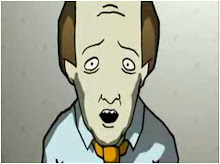
The Configuration Librarian maintains strict control over releases (you naughty boy)


08:30 – an early start, and I only just make it. I suspect that I have the furthest to drive.

We begin with a review of last night’s homework – a mock Foundation paper. The lecturer takes us through it page by page, with delegates required to pipe up whenever they got a question wrong, so that they can feel like idiots / have the answer explained to them. As I didn’t get any wrong until question 40, I feel pretty smug at first.

One fact is blindingly clear: you may have read somewhere that “there are no trick questions in the PRINCE2 exams”. Well, that’s a lie – the mock Foundation paper (which consists of real questions) is full of sneaky double negatives, three-questions-for-the-price-of-one, and questions which look as though they’re asking about one thing, but are actually testing you on something else completely. Beware!

And, of course, multiple-choice is a double-edged sword. While it is true than even a retarded chimpanzee should be able to score 25%, on the other hand there is no scope for ambiguity, or for successfully arguing your case. Answer (a) is either right or wrong, score one or zero, circuit gate closed or open, that’s your lot. And, of course, there’s no opportunity to be a smart arse like the fabled philosophy student at my old Uni who, when confronted with an exam question that terrifyingly demanded “Why?”, answered succinctly “Why not?” and spent the rest of the afternoon in the union bar (according to the legend, the faculty were of course forced to award him full marks).

09:00 – we move on to the next topic: the IP process (you do know this is “Initiating a Project, don’t you?). And what is the first concern when initiating your project? Why, QUALITY, of course, with a capital K.

“Quality” is such an easy sell to the captains of industry, isn’t it? You can almost see the presentation – “Yes, gentlemen, quality is built-in from the very start of our PRINCE2 method – it’s our first concern”. But what, exactly, do captains of industry think of when they hear the word “quality”?

Traditional features like the bulls-eye air vents and the organ stop controls are exquisitely framed by brilliant veneers on the fascia, and the front and rear seat consoles. Premium grade leather hide is also employed to soft surfaces, including the trim around the sporting gear selector and steering wheel. Knurled brightware controls and a choice of premium wood veneers exemplify the craftsman’s touch

(The Continental GT interior, Bentley Motors website)

Not, perhaps, some pedantic w@nker picking holes in the grammar of your Business Case in a sweaty little meeting room somewhere.

Anyway, if you want QUALITY in your project, you’re going to need a Quality Plan (we all know that if you fail to plan, then you plan to fail, right?). So, we cover how to put one of those together, and also PRINCE2’s rather sinister-sounding “Path to Quality”, which sounds a bit like a Scientology auditing session.

We do an exercise, where we all have to create a Quality Plan, based on the same running project scenario we worked on yesterday. I have to admit, mine was rubbish – some quickly scribbled notes on a torn sheet of A4 – nothing “quality” about it at all. But, that’s enough QUALITY for now.

10:45 – after a much-needed coffee break and, yes, a Club chocolate biscuit (I had no idea they still made them), we move onto Planning proper, and PRINCE2’S product-based planning technique. I think I finally get it now, especially as the lecturer makes clear that section 22.1 of the OGC manual (The four products of product-based planning) actually lists the products in the order they should be produced, which was not at all clear from my first reading. I do, at this stage, feel sorry for anyone on the course who has not already produced project plans using MS Project and the like, and this sort of knowledge is very much assumed.

12:30 – lunch is a similar buffet to yesterday (I’m not complaining – I just regret failing to bring along an Alan Partridge-style oversized plate, and so am forced to make that shameful second visit). Our break is enlivened by a nice sales lady giving us a presentation of the company’s other training products. Ho hum …

13:10 – back to work, and the planning session completes, followed by a bit about Project Controls, Configuration Management and setting up your Project Files (I must admit, I find this last bit of guidance re your project filing to be a bit pathetic – something PRINCE2 could easily do without). The only trouble with Configuration Management is that I keep having these thoughts about the Configuration Librarian …

15:30 – coffee break, and then we crack on with Managing Stage Boundaries, followed by the last exercise of the day – preparing a Product Description. We are allowed to pick any product around us, and (for some reason) most of us choose a plastic cup.

17:00 – end of day. Homework is another Foundation Exam.

Monday, 8 September 2008

PRINCE2 Foundation & Practitioner Course – Day 1

The lecturer was reassuringly grey-haired


08:40 – At last! The quest is at an end. After a good thirty minutes driving round and round and round and round … the light industrial park that is my goal looms before me. I really should spring for satnav – map-reading is all very well in theory, but when you can’t see any street-signs and there’s nowhere legal to pull over and navigate …

Funny place for an IT training organisation – nestled between the builders’ merchants and tyre and exhaust outlets. It doesn’t look like there’s anywhere to buy lunch – good thing I brought a sandwich with me. But, there is at least no problem with parking, and the building I’m headed for looks tidy and respectable.

The lecturer (I suppose I should say, “course facilitator”) turns out to be lurking outside, pulling down a sly fag before start-up time. He’s reassuringly grey-haired – I’d hate to be learning something off someone who looks younger than me (a preference that is becoming increasingly hard to sustain, now that James Bond, Doctor Who and the leader of the Conservative Party are all my junior – so what do I want to be when I grow up?).

There’s no reception – I just walk straight through the door and into the training room. The lecturer asks my name, and simply checks me off on a list (hint for cash-strapped PRINCE2 wannabes – just turn up at a course, give a common name like “John Smith” and you could be in f.o.c.).

Joy! There is not only coffee, but also a fine selection of biscuits and even a bowl of fruit. Dodging the latter, I seize a latte and a Kitkat.

09:00 – the introductions begin. We all do the usual “My name is Joe Bloggs, and I am an alcoholic [sorry] a Senior Analyst who is starting to manage projects” speech. The room is packed – there are 16 delegates in total, a full course. I learn later that there has been a marked increase in the course’s popularity over the past three to four months – a sign of the times? So many boxes to be checked these days.

The delegates are a mixed bunch. Mostly, they fall into pretty obvious categories by their particular definition of “smart casual” dress (as specified in the pre-course notes – is there another country in the world where this would need to be mentioned?):
  • NHS, local authority and charity employees: Marks & Spencer (or maybe Primark – have you heard there’s a credit crunch?) sensible blouses, polo shirts, slacks and skirts, all in varying shades of beige polyester;
  • Software house, telecoms and engineering techies (looking to be promoted beyond their competence): defiantly scruffy jeans and tee shirts;
  • Bankers (a complete wunch): the same business suit and shirt they wear every day, but … err … leave the tie off … (it is casual, you know).

There’s one professional student (he’s just done his MBA, and PRINCE2 obviously slots in somewhere between the Applied Basket Weaving and Masters in Financial Mathematics courses he’s got lined up for autumn). There’s also one bold young lady who blatantly admits to having been made redundant (so, I’m not the only one hoping to tout myself around to anyone who’s hiring).

The lecturer introduces himself. He has, indeed, been around the block a few times, and has an IT background involving major insurers and banks, before joining this training crew. He has an avuncular, no nonsense style – I think he’s going to be good.

The course structure and objectives are covered. This is a five-day course, with the Foundation Exam on Wednesday afternoon, and the Practitioner Exam on Friday afternoon. It is intensive stuff – not, it is stressed, because PRINCE2 is intellectually difficult, but simply because there is a lot of information to impart. I wonder how many amongst us have actually completed the pre-course reading (most of the OGC manual); naturally, I make light of my efforts when in conversation, and I suspect that I am not the only one who does not wish to sound like a swot. In truth, I do think that, without a decent bit of pre-course work, you would rapidly be drowning in unfamiliar jargon.

We all get a very nice handout pack, containing slide copies, along with pens and highlight markers to go with our OGC manuals that we were sent in the post pre-course. We find out that – shock horrors! – there will be HOMEWORK in addition to the 9am-5.30pm slog. So much for having a life.

The aim is to complete the imparting of knowledge by Wednesday lunchtime, so that we can tackle the Foundation Exam in the afternoon. Thursday till Friday lunchtime, thereafter, will concentrate on the scenario work that is required for the Practitioner Exam. We are politely informed that we may feel overwhelmed.

Big news – BOTH exams are now multiple choice! No more three-hour essays for the Practitioner, thank God. Now, even a retarded chimpanzee has a fair chance of at least a 25% score.

A bit of gossip – PRINCE2 is changing. As of 2009, the manual will be split into two documents – one for Project Managers, and one for the Project Board. Well, let’s not worry about that now.

09:30 – the course proper starts. Basic stuff first – what is a project? Why do projects fail? Why use a Project Management method?

The answers, surprisingly enough, are to be found in the OGC manual … now, this really is a key point, because, let’s face it, what are we all on this course for? To learn how to use PRINCE2? Maybe for some of us … but, in the real world, the real purpose of the course is (just like the real purpose of school and university) to enable you to pass the exam. What we really want is that box ticked so that the next brain-dead recruitment agent who leafs through our CV doesn’t instantly discard it because “the client really wants someone who is PRINCE2 qualified”. Now, the Foundation Exam is closed-book (it’s basically just a memory test) but in the Practitioner Exam (the real challenge) you are allowed to take along your copy of the OGC manual (and nothing else).

Which is, if you think about it, pretty amazing, really. I don’t recall being allowed to take along my copy of Milton Friedman’s Monetary History of the United States to my University macroeconomics exam. And, even if I had, it might not have done me much good, as the exam was just as likely to cover Keynes as Friedman, and a dozen other economists too. But, with PRINCE2, the OGC manual is literally the word of God – that’s it, the whole subject in those 450 pages, containing the answer to every question you may be posed. And, you get to take it in with you.

Maybe I’m stating the obvious here, but it strikes me that the key Practitioner Exam technique is to know your way around the OGC manual, to have high-lighted the key points (you are allowed to use an annotated version), and to be able to find the relevant sections as quickly as possible.

And, it becomes clear, this course is going to deliver on that front. As he goes through each topic, the lecturer shows us which section of the manual contains the information, and even suggests which sentences to highlight with our funky yellow pens. Plus, I am rapidly adding any notes I take down to the manual’s margins, not on a separate pad or my handout pack – you can’t take those into the exam!

On my way home tonight, I am going to make an essential purchase: a pack of those mini-Post-it notes to mark each manual section for instant access.

10:30 – break for coffee, and this time a muesli bar (well, I had to skip breakfast). Soon after we are back to it, with an overview of PRINCE2 proper, PRINCE2 benefits and some of the jargon and product descriptions. Note that PRINCE2 is about projects, not programmes – the old PRINCE (1) used to cover programmes, but the OGC have worked out they can sell more manuals by splitting programme management into a separate discipline and calling it MSP.

12:30 – lunch, and wonder of wonders, a buffet appears. Now we are talking – there was no hint of us getting fed in the course brochure. I realise that to some of you a few rounds of sandwiches, a couple of pork pies and mini quiches, plus some fruit cake to follow, may not sound like much (especially if you are employed by the European Commission), but I for one now consider my course fee very well spent. Get in!

13:00 – Starting Up a Project. After lunch, we cover the SU process and project organisation, followed by a case study where we all have to identify likely individuals in a set project scenario.

15:30 – another coffee break, followed by Business Cases and a Business Case case study.

16:00 – I feel my eyes getting very heavy; there is only so much information one can absorb. Luckily, we whiz over risk management and get into another case study, so I have to wake up.

17:15 – wind up time. Some interesting statistics on the exam pass rates:

  • Foundation Exam : 99%
  • Practitioner : 80%

I’m not sure if that’s reassuring or daunting – how thick will you feel if you fail? Actually, given that the pass level is only 50%, it’ll probably be quite difficult to fail (remember, retarded chimps get 25% on multiple choice).

What’s truly astounding is that over 500 people per week are sitting the Practitioner Exam in the U.K. alone!

Looks like PRINCE2 is going the way of A-levels – no wonder all the job ad’s specify accreditation. They’ll be asking for instructor-level marks soon (66% or above).

Another piece of real-world advice: while there are thirty-six different PRINCE2 management products listed in the manual, in reality you can get away with using about eight.

If in doubt, always raise a Project Issue!

We are given our homework – a mock Foundation Exam.

17:30 -we are released! Hurrah! So far, I am impressed – especially by the lunch and biscuits.

Sunday, 7 September 2008

RTFM Units 5 and 6


We put the K into Kwality!

Days five and six of the pre-course work – time to pick up the pace, as the real course starts tomorrow (and who, in the real world, has the luxury of as much preparation as they would like?). So, to finish off, I now need to read the following sections from the OGC manual:

  • From the Components section, Quality in a Project Environment, Configuration Management, and Change Control (“Change Control to Major Tom … Commencing countdown, engines on …”)
  • From the Techniques section, Quality Review Technique and Change Control Approach
  • From the ….. Zzzzzzzzzzzz … Ooops! Sorry about that, I must have nodded off. Not the most thrilling read in the world, is it?
  • From the Processes section, Closing a Project
  • Then, to finish off, the Glossary, the PRINCE2 Healthcheck (Appendix D) and the Project Document Management (Appendix E … now, this one really will send you to sleep)

Whew! Thank goodness that’s over. Does it make any sense? Well, yes it does, but at the moment my head keeps swimming around with PRINCE2-speak, and I’m still having to take a step back to differentiate between processes, components and techniques. I seem to have done alright with the self-assessment questions, and (in isolation) each topic seems quite straightforward, but there are a lot of parts to put together, and I feel as though I have a few bits left at the end which don’t seem to fit in anywhere. Maybe they’re just like the spare screws those nice people at IKEA supply you with in their flat-pack furniture. Oh, well, the course proper starts tomorrow, so stay tuned for more exciting adventures in the world of PRINCE2 training.

Saturday, 6 September 2008

RTFM Unit 4

Controlling a Stage can be quite challenging


Day four of the pre-course work - the exciting world of:

  • From the Processes section, Managing Stage Boundaries, Controlling a Stage and Managing Product Delivery (just get UPS to do it, surely?)
  • From the Components section, Controls

Well, to summarise:

Managing Stage Boundaries is where you draw up the real plan for actually doing something, and try to get some actual named bodies assigned to it. In real life, this may be something you’d prefer to avoid, if you’re a high-level, strategic directions and architectures kinda guy.

Controlling a Stage is where you get to hand out neatly parcelled Work Packages to the bods doing the actual work (whether it’s their birthday or not), and then check up on the results.

Managing Product Delivery is that tiny little box you find at the heart of all these methodologies that involves ACTUAL WORK (i.e., producing executable code, laying bricks, assembling a nuclear warhead, whatever). You should avoid this like the plague.

Now, what about Controls? As Ms Jackson once remarked:

Are we ready? I am cause its all about control
And Ive got lots of it

Im in control, never gonna stop
Control, to get what I want
Control, I got to have a lot
Control, now Im all grown up

Lots of it, alright. Control is really what PRINCE2 is all about. You need to know about controls, the contingency, tolerance and the change budget … all slightly different and make sure you get the definitions right.

Wednesday, 3 September 2008

RTFM Unit 3

Every Plan Involves Risk

Day three of the pre-course work. That means more chapters of the OGC manual:

  • From the Processes section, Initiating a Project and Planning
  • From the Components section, Plans and The Management of Risk
  • From the Techniques section, Product Based Planning
  • Appendix C, Risk Categories

Does anyone sense an element of repetition here? You have a process called Planning, a component called Plans, and a technique called Product Based Planning. Maybe they’re just forcing the message home, for those of us with short attention spans. Now, we all know planning is important, because:

If you fail to plan, then you plan to fail

On the other hand, maybe von Moltke had it right:

No plan ever survives contact with the enemy

To be fair, PRINCE2 does try to accommodate both maxims – planning is important, but it is seen as an iterative process, with the high-level project plan only fleshed out into named resources at the stage level.

What about all this risky business? The key quote is from Management of Risk, section 17.2.2:

The Project Manager is responsible for ensuring that the risks are identified, recorded, and regularly reviewed.

And … errr … that’s it! Actually doing something about those risks is down to the Project Board, as 17.2.2 goes on to explain (although, the PM does have to modify his plans to include agreed risk mitigation actions).

So, the key PRINCE2 risk management principle is simply this: CYA (Cover Your *rse). And, the secret to successful CYA implementation is: for f*cks sake record any and all risks in the Risk Log and keep banging on about them on a regular basis. Then you can say “Nah nah nah nah nah !!! I TOLD you so!”

Tuesday, 2 September 2008

RTFM Unit 2


The trigger for the project is the Project Mandate.
(OGC manual, Starting Up A Project, section 4.2)

Cracking on. Unit 2 of the pre-course work has our hero slogging his way through the following sections of the OGC manual:

  • From the Processes section, Starting Up a Project and Directing a Project
  • From the Components section, the Business Case and Organisation
  • Appendix B – Project Management Team Roles

Notice once again PRINCE2’s unique (mis)use of the English Lanuage – “Starting Up” and “Initiating” are two separate things, not synonyms as we all thought. Guess which one comes first? Guess which one is and which one is not actually part of the project life cycle?

“Components” is a strange term, too – now, the Business Case is really a product (indeed, it has an entry in Appendix A, Product Description Outlines) – i.e., a document in normal human language. Organisation, on the other hand, is all about the management structure – something quite central to PRINCE2, and quite remarkably rigid. I’m not sure that “components” would be my first choice for a collective term – “odds and sods” might be more realistic.

Anyway, there are some clear lessons to take from this unit:

  • No project can start unless the project manager is first supplied with a bottle of cheap 1970’s aftershave.
  • The project manager then has to start producing a Daily Log (“Would you like to see my Daily Log?” “Get lost, you filthy depraved scumbag”).
  • You, as project manager, don’t really need to bother your *rse about Directing a Project.
  • You are the Project Executive’s bitch.

Monday, 1 September 2008

RTFM Unit 1

Right, time to get on with some actual work, I suppose. Unit 1 of the pre-course study guide is not too scary; it covers amazing stuff such as:

  • Check your course joining instructions for times, dates, location, and whether you need overnight accommodation (gosh, and here was I thinking I’d just sleep under a hedge).
  • Familiarise yourself with the basic structure of OGC’s Managing Successful Projects With PRINCE2 (emm … it’s a big paperback book, nice glossy paper, black print with headers and diagrams in RED for some reason, not a lot of illustrations and precious few jokes).
  • Read the various introductions (which set up various definitions, etc. – a PRINCE2 “customer” is not the same thing as newsagent’s “customer”).
  • Read the Product Description Outlines in Appendix A.

Now, this last bit is informative. In practice, I suspect that the Product Description Outlines (i.e., document templates in normal English) will turn out to be the single most useful part of the PRINCE2 manual – they certainly were with METHOD/1, that late, unlamented IT project management method I used years ago. The big difference between PRINCE2 and METHOD/1, however, is that PRINCE2 defines 36 different types of “management product” (now, there’s an oxymoron for you), whereas METHOD/1 had … f-ing SHEDLOADS. So, yippee!!! Less is most definitely more.